7 High-Income AI Literacy Skills Every K-12 Teacher Should Master
As classrooms evolve into hybrid-intelligence hubs, mastering AI isn't just a pedagogical advantage—it’s a career-defining financial asset.

The New Frontier of the American Classroom
It is 7:45 AM on a Tuesday in September 2026. Instead of wrestling with a jammed photocopier, Sarah, a veteran tenth-grade English teacher, is fine-tuning a custom GPT agent designed to provide real-time, Socratic feedback to her students as they analyze The Great Gatsby. By the time the first bell rings, her AI assistant has already graded 85 formative assessments, flagged three students who are struggling with metaphorical subtext, and drafted a differentiated lesson plan for the afternoon.
Sarah isn't just teaching; she is orchestrating a symphony of silicon and soul. The landscape of education has shifted. According to a 2024 report by World Economic Forum, AI is expected to disrupt 44% of workers' skills over the next five years, and K-12 education is at the epicenter of this transformation. To thrive in this new era, educators must move beyond basic digital awareness.
AI literacy for teachers is the ability to critically understand, ethically apply, and strategically leverage artificial intelligence to enhance student outcomes, automate administrative burdens, and design personalized learning experiences. Mastery of these skills allows teachers to move from traditional instruction into high-value roles like curriculum architects and AI implementation consultants, significantly increasing their career earnings potential.
Why AI Literacy is the New Professional Gold Standard
The demand for AI-fluent educators is skyrocketing. Schools are no longer looking for teachers who simply know how to use Google Classroom; they are searching for leaders who can navigate the ethical minefield of generative AI while maximizing its efficiency. As we approach the 2026 school year, the following seven high-income AI literacy skills have emerged as the non-negotiable pillars of a modern teaching career.
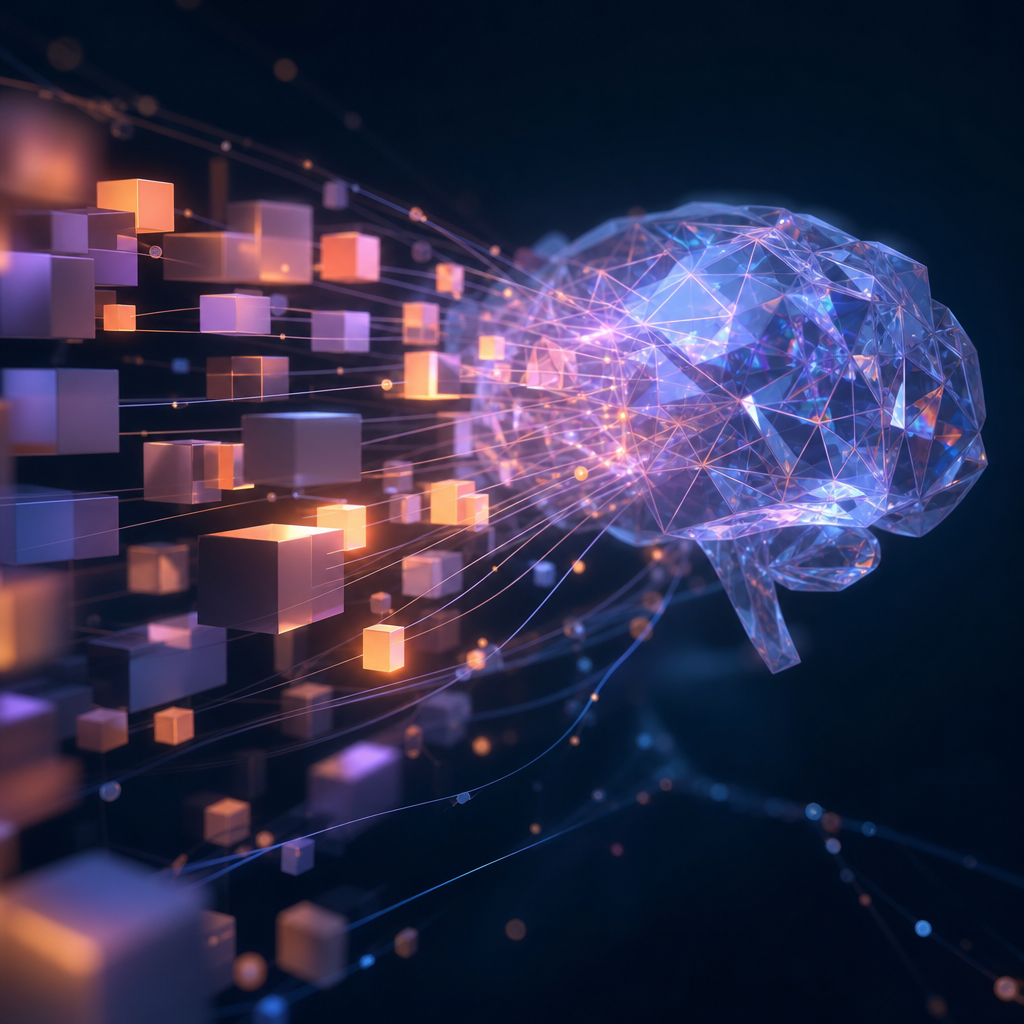 Crafting the perfect prompt: The new bridge between human intent and machine output.
1. Advanced Prompt Engineering for Differentiated Instruction
What is prompt engineering for teachers? Prompt engineering is the art of crafting precise, contextual instructions for Large Language Models (LLMs) to generate high-quality educational outputs.
In 2026, a teacher’s ability to 'talk' to the machine determines their workload. High-income educators don't just ask ChatGPT to "write a quiz." They use multi-shot prompting and Chain-of-Thought (CoT) techniques to generate tiered assignments. For instance, a teacher can prompt an AI to rewrite a complex scientific article at four different Lexile levels simultaneously, ensuring every student—from a struggling reader to a gifted polymath—accesses the same core curriculum.
The Prompting Hierarchy for Educators
| Technique | Complexity | Primary Use Case |
|---|---|---|
| Zero-Shot | Low | Quick definitions or simple email drafts |
| Few-Shot | Medium | Creating rubrics based on specific past examples |
| Chain-of-Thought | High | Solving complex math problems step-by-step for tutorials |
| Role-Prompting | High | Simulating a historical figure for a student interview |
2. Synthetic Data Management and Predictive Analytics
How will teachers use predictive analytics by 2026? Teachers will act as data scientists, using AI platforms like Khanmigo or Microsoft Copilot to analyze real-time student performance patterns and predict which students are at risk of falling behind before a single test is failed.
By mastering data literacy, you aren't just looking at grades; you are looking at 'engagement metrics' and 'concept decay.' High-income teachers use these insights to offer 'precision intervention.' This skill is highly sought after by private institutions and edtech firms, where the ability to translate raw data into actionable pedagogical strategy is worth a premium salary.
"The teacher of 2026 is a data-informed mentor. Those who can bridge the gap between AI-generated data and human-centered empathy will be the most valuable assets in the school system."
 Predictive analytics allow educators to see student hurdles before they appear.
3. Ethical AI Governance and Academic Integrity Design
As AI becomes ubiquitous, the 'cat-and-mouse' game of detecting AI-written essays is ending. In its place is a need for Academic Integrity Design. This involves creating "AI-resistant" or "AI-integrated" assessments that focus on the process of learning rather than just the final product.
Teachers who master this skill understand the nuances of the EU AI Act and local privacy laws (like COPPA in the U.S.). They become the 'Ethics Leads' in their districts. You must be able to teach students how to cite AI, how to identify algorithmic bias, and how to maintain their own cognitive agency in an automated world.
4. AI-Augmented Curriculum Architecture
The days of static textbooks are numbered. High-income AI literacy involves the ability to build 'living curricula.' Using tools like Gamma or Curipod, teachers can now generate full-unit slide decks, interactive simulations, and gamified assessments in minutes.
However, the skill isn't in the generation—it’s in the curation. A master teacher serves as the editor-in-chief, ensuring that AI-generated content aligns with state standards and culturally responsive teaching practices. This ability to rapidly prototype high-quality instructional materials allows teachers to transition into lucrative instructional design roles.
5. Multimodal Content Creation (Video, Voice, and Beyond)
By 2026, literacy isn't just text. It’s video, audio, and immersive VR. High-income teachers are mastering tools like HeyGen for creating multilingual instructional videos or ElevenLabs for custom audiobooks of their own lectures.
Imagine a world where a teacher’s lesson on the Roman Empire is delivered by a hyper-realistic AI avatar of Julius Caesar, tailored to the student’s native language. The ability to produce these assets elevates a teacher from a classroom instructor to a digital content creator, opening doors to the global 'edupreneur' market.
6. AI Agent Orchestration
One of the most complex AI literacy skills is Agent Orchestration. This involves setting up multiple specialized AI agents to work together. For example, a teacher might deploy one agent to monitor student chat for safety, another to provide hints on math problems, and a third to summarize daily progress for parents.
Understanding how these agents interact—and where they fail—is a technical skill that commands a high salary in the burgeoning field of educational technology consultancy.
Comparison: Human vs. AI-Augmented Teaching Workflow
| Task | Traditional Workflow (Hours) | AI-Augmented Workflow (Minutes) |
|---|---|---|
| Lesson Planning | 2 - 4 hours | 15 minutes |
| Grading & Feedback | 5 - 10 hours | 30 minutes (Human Review) |
| Parent Communication | 2 hours | 10 minutes |
| Differentiating 5 ways | 3 hours | 5 minutes |
7. Strategic AI Tutoring Integration
Is AI going to replace tutors? No, but it will democratize access to 1-on-1 support. The high-income skill here is the ability to integrate 'Intelligent Tutoring Systems' (ITS) into the classroom flow.
Teachers must learn to act as the 'human-in-the-loop,' stepping in when the AI reaches its limits. According to research from Stanford Graduate School of Education, the most effective learning happens in 'blended' environments where AI handles repetitive drills and humans handle complex, socio-emotional problem-solving. Educators who can prove they increase 'Growth Percentiles' using these tools are the ones winning merit-based bonuses and leadership roles.
"We are moving toward a 'Centaur' model of teaching: half-human, half-AI, and significantly more powerful than either could be alone."
FAQ: Navigating the AI Shift in Education
How can I start learning AI literacy without a technical background?
Start by using free tools like Anthropic's Claude or Microsoft Copilot to automate your smallest administrative tasks, such as drafting emails or organizing lesson notes. Focus on learning 'prompt engineering' through free resources like DeepLearning.AI or Coursera before moving to specialized edtech tools.
Will AI lead to a decrease in teacher salaries?
On the contrary, teachers who master AI literacy are seeing new opportunities for higher-paying roles, such as AI Integration Specialists, Curriculum Architects, and EdTech Consultants. By reducing the time spent on 'low-value' administrative tasks, teachers can focus on 'high-value' mentorship and strategic instructional design.
Is it ethical to use AI for grading student work?
It is ethical as long as there is a 'human-in-the-loop.' AI should be used to provide initial feedback and data, but the final grade and the emotional support behind the feedback must come from the teacher to ensure fairness and accuracy.
Summary: The 2026 Verdict
The 2026 school year will not belong to the most tech-savvy teacher, but to the most AI-literate one. By mastering prompt engineering, predictive analytics, and ethical design, you are not just future-proofing your job—you are expanding your income potential and reclaiming your time. The future of education is hybrid, and the most valuable component in the classroom remains a teacher who knows how to harness the power of the machine.
“The teacher of 2026 is no longer a dispenser of information, but a masterful curator of machine intelligence.”
Get the Digest
Sharp, original reporting in your inbox. One weekly email, no noise.
Frequently asked questions
- What is the most important AI skill for teachers in 2026?
- Advanced Prompt Engineering is the foundational skill, as it allows teachers to effectively communicate with AI to generate differentiated lesson plans, rubrics, and creative assessments.
- How does AI literacy increase a teacher's income?
- It qualifies educators for high-demand specialized roles like AI Integration Specialists and EdTech consultants, while also enabling 'edupreneurs' to create and sell sophisticated digital curricula globally.
- Can AI help with student mental health and engagement?
- Yes, through predictive analytics, AI can identify patterns in student behavior and engagement, allowing teachers to intervene early with personalized emotional and academic support.