7 Stoic Exercises for Processing Digital Burnout and Attention
Ancient wisdom for the modern algorithm: How Seneca and Marcus Aurelius provide the blueprint for cognitive sovereignty.
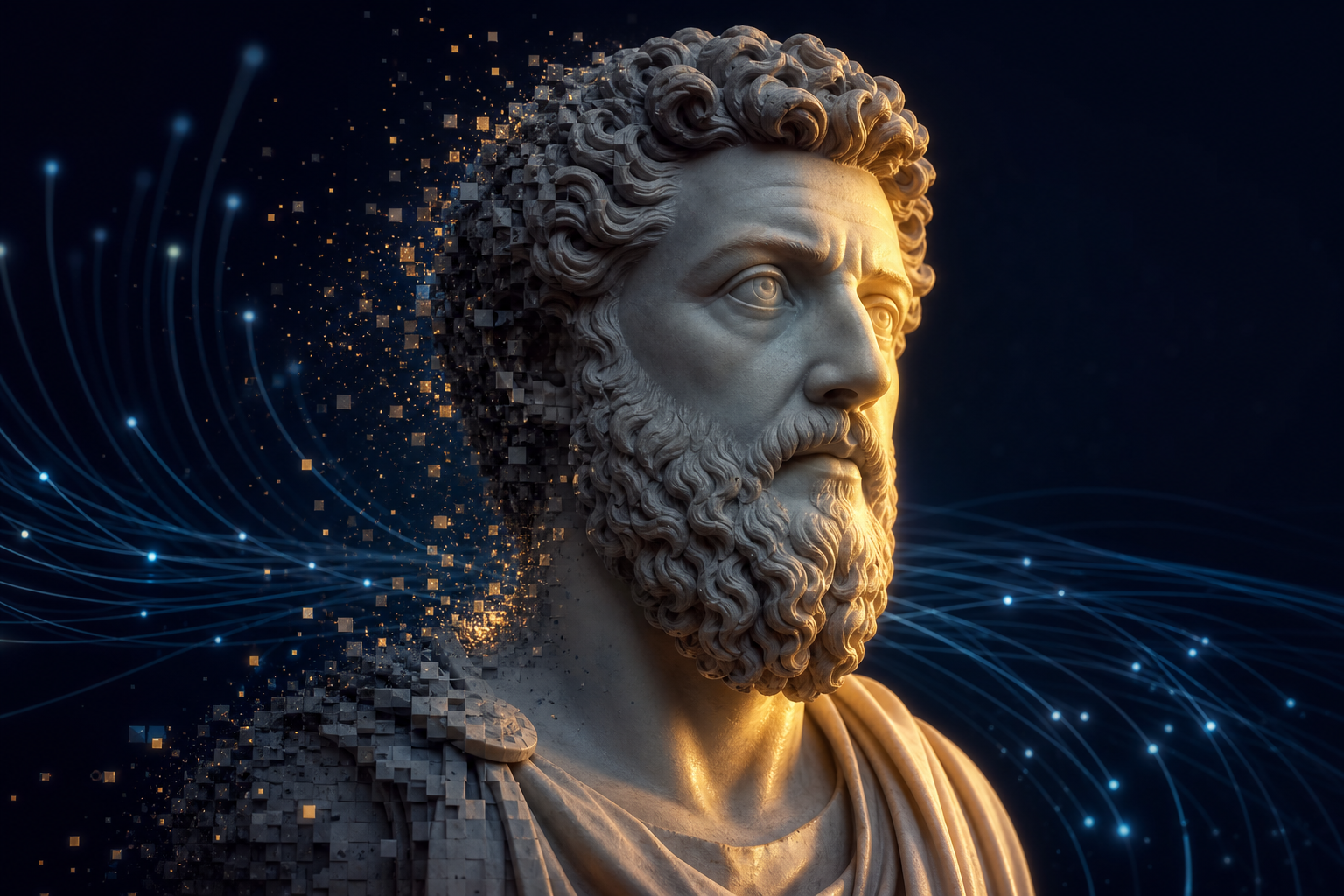
The War for Your Attention
We are living in an era of unprecedented cognitive fragmentation. Between the relentless ping of notifications and the infinite scroll of the feed, our ability to maintain deep focus is under systemic assault. Digital burnout is the state of mental, emotional, and physical exhaustion caused by prolonged and excessive exposure to digital devices and information streams. To reclaim our peace, we must look to the past.
Stoicism is a Hellenistic philosophy that teaches the development of self-control and fortitude as a means of overcoming destructive emotions. By applying specific Stoic exercises for processing digital burnout, individuals can distinguish between what is within their control—their own thoughts and actions—and what is not—the algorithms and opinions of the internet—to restore their attention span and mental clarity.
Why Stoicism is the Antidote to the Algorithm
The founders of Stoicism, from Zeno to Marcus Aurelius, didn't have smartphones, but they dealt with the universal human struggle of distraction and social pressure. They viewed the mind as a citadel. If that citadel is breached by every passing whim or external headline, the individual loses their freedom. Today, that breach happens every time we reflexively check a screen.
| Concept | Modern Digital Struggle | Stoic Solution |
|---|---|---|
| Proactive vs. Reactive | Checking phone immediately upon waking. | Starting the day with intentional reflection. |
| Information Overload | Doomscrolling and infinite feeds. | Practicing 'selective ignorance'. |
| Validation Seeking | Counting likes and engagement. | External indifference (Adiaphora). |
| Focus | Constant multitasking and context switching. | Total presence in the 'Now'. |
 Practicing 'The View from Above' allows us to see our digital anxieties within the context of the cosmos.
1. The Dichotomy of Control: Filtering Your Feed
How can I stop feeling overwhelmed by the news? The most fundamental Stoic exercise is the Dichotomy of Control. Epictetus opens his Enchiridion with the reminder that some things are up to us, and some are not.
In the digital age, your feed is largely outside your control, but your reaction to it is entirely yours. When you feel the heat of digital burnout rising, stop and categorize the stimulus. Is the political turmoil in a country 5,000 miles away something you can influence right now? If not, the Stoic move is to classify it as 'indifferent' to your immediate character. This isn't apathy; it is the strategic conservation of cognitive energy.
2. Pre-Meditatio Malorum: Visualizing the Distraction
What is Pre-meditatio Malorum? It is the practice of 'pre-meditating' on potential evils or setbacks. Traditionally, Stoics used this to prepare for loss or death. For the modern professional, use it to prepare for the workday.
Before you open your laptop, visualize the distractions you will face: the 'urgent' Slack message that isn't urgent, the lure of the news cycle, and the rabbit hole of YouTube. By mentally rehearsing how you will acknowledge these distractions and then discard them, you strip them of their power to surprise and derail you.
"The soul becomes dyed with the color of its thoughts. Man, then, into what color do you want your soul to be dyed?" — Marcus Aurelius
 The Stoic morning routine prioritizes the internal journal over the external feed.
3. Voluntary Hardship: The Digital Fast
Seneca famously advised setting aside a few days a month to live on the scantiest of fare and coarsest of dress to prove that one can thrive without luxury. In our context, this is the Digital Fast.
This goes beyond a simple 'break.' It is a deliberate exercise in proving to yourself that the world does not end if you are unreachable. According to research from the University of California, Irvine, it takes an average of 23 minutes and 15 seconds to return to a task after an interruption. By practicing voluntary digital hardship, you reclaim those hours.
4. The View from Above: Zooming Out of the Outrage
When we are caught in a 'Twitter storm' or a heated comment section, our perspective narrows until the digital conflict feels like a life-or-death struggle. The Stoics practiced 'The View from Above,' mentally rising into the atmosphere to see the Earth as a tiny speck.
From this height, a snarky reply or a lost follower becomes invisible. This exercise breaks the myopia of digital burnout by reminding you of the vastness of time and space, making the algorithmic outrage of the hour seem appropriately insignificant.
5. Contemplation of the Sage: Choosing Digital Role Models
How can I improve my digital habits? Ask yourself: "What would a Wise Person do?" This Stoic exercise involves picking a role model—historical or contemporary—and imagining their response to a situation.
If Marcus Aurelius had an Instagram, would he spend three hours scrolling through Reels? Likely not. He would use the tool for its utility and then return to his duties. When you feel your attention span slipping, invoke your 'Digital Sage' to guide your hand away from the screen.
6. Memento Mori: Remember Your Mortality
While it sounds morbid, Memento Mori is the ultimate productivity hack. It is the realization that your time is finite. According to data from DataReportal, the average person now spends nearly 7 hours a day online.
A Stoic looks at that number and sees a tragedy: years of a human life surrendered to pixels. Reminding yourself that you could leave life right now helps you prioritize deep work and real-world connection over digital fluff.
7. Evening Review: Auditing Your Attention
At the end of each day, Seneca would sit in the dark and review his actions. To process digital burnout, you must perform a 'Digital Audit' every evening.
- Where did I lose my focus today?
- Did I let an algorithm dictate my mood?
- How can I improve my boundaries tomorrow?
This creates a feedback loop that transforms a passive victim of the attention economy into an active architect of their own mind.
Stoic vs. Modern Digital Habits
| Daily Habit | Modern Default | Stoic Approach |
|---|---|---|
| Morning | Phone in bed immediately. | Journaling/Reflection. |
| Work | Notifications enabled. | Deep Work/Focus Blocks. |
| Leisure | Passive consumption. | Active learning/Connection. |
| Conflict | Immediate reaction/shouting. | Pause and analyze impression. |
Frequently Asked Questions (FAQ)
How does Stoicism help with digital burnout?
Stoicism helps with digital burnout by providing tools like the Dichotomy of Control, which allows individuals to filter out external digital stressors and focus solely on their internal responses and intentional actions.
Can Stoic exercises improve my attention span?
Yes, Stoic exercises like 'The View from Above' and 'Pre-meditatio Malorum' train the brain to resist impulsive reactions to stimuli, thereby strengthening the 'top-down' cognitive control required for a sustained attention span.
What is a Stoic 'Digital Fast'?
A digital fast is a form of voluntary hardship where one intentionally disconnects from all digital devices for a set period to break the cycle of dopamine-seeking behavior and regain psychological independence.
Why is the 'Evening Review' important for mental health?
The Evening Review allows you to objectively analyze your digital consumption patterns, helping you identify 'attention leaks' and set better boundaries for the following day to prevent emotional exhaustion.
“The mind is a fortress; every notification you allow to distract you is a breach in its walls.”
Get the Digest
Sharp, original reporting in your inbox. One weekly email, no noise.
Frequently asked questions
- How can I stop checking my phone so often using Stoicism?
- Use the 'Dichotomy of Control' to recognize that the urge to check is an internal impression you can decline, while the notification itself is an external event you should remain indifferent toward.
- What is the best Stoic exercise for focus?
- The 'Evening Review' is the most effective for long-term focus, as it forces you to account for your time and identifies the specific digital triggers that derail your productivity.
- Is a digital detox a Stoic practice?
- A digital detox aligns with the Stoic practice of 'Voluntary Hardship,' where you intentionally live without comforts to prove your happiness isn't dependent on them.