How the 2026 Mars Sample Return Mission Works: A Step-by-Step Explainer
Humanity's most ambitious retrieval project involves a multi-stage interplanetary relay to bring Martian soil back to Earth.
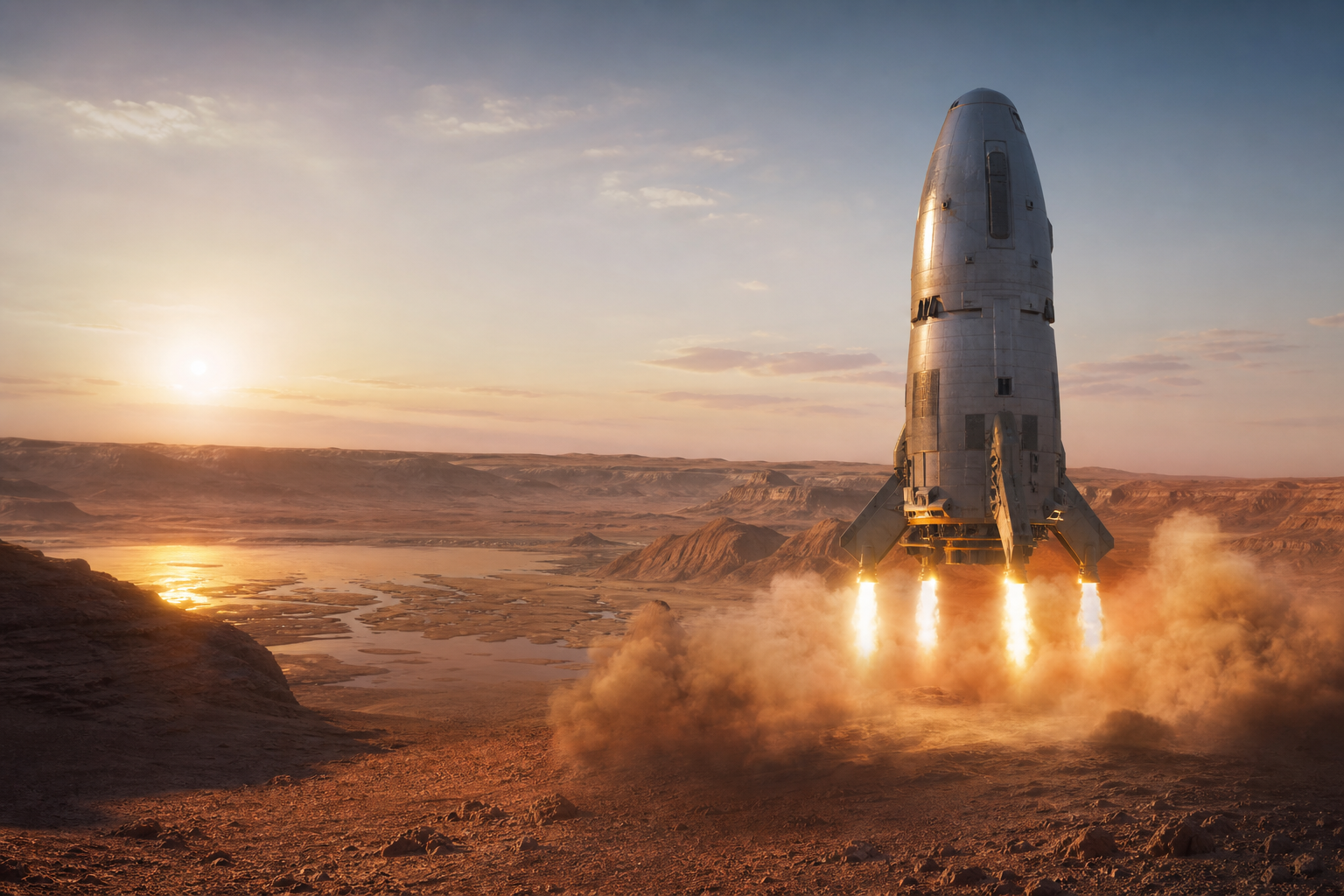
For decades, we have sent our robotic proxies to the Red Planet to act as our eyes and ears. They have peered into ancient craters and tasted the dust of frozen plains, but they are limited by the miniaturized labs they carry on their backs. The Mars Sample Return mission (MSR) represents a paradigm shift: instead of taking the lab to Mars, we are bringing Mars to the lab. This multi-phase campaign is the first attempt to launch a rocket from the surface of another planet and orchestrate a deep-space handoff of precious cargo.
The Direct Answer: How does Mars Sample Return work?
The Mars Sample Return mission works by using a sequence of three distinct spacecraft: a rover to collect rock cores, a lander to launch those cores into Martian orbit via a small rocket, and an orbiter to capture the samples and ferry them back to Earth for high-precision laboratory analysis. This process ensures the samples, gathered by NASA's Perseverance rover, remain pristine and hermetically sealed throughout their multi-year journey.
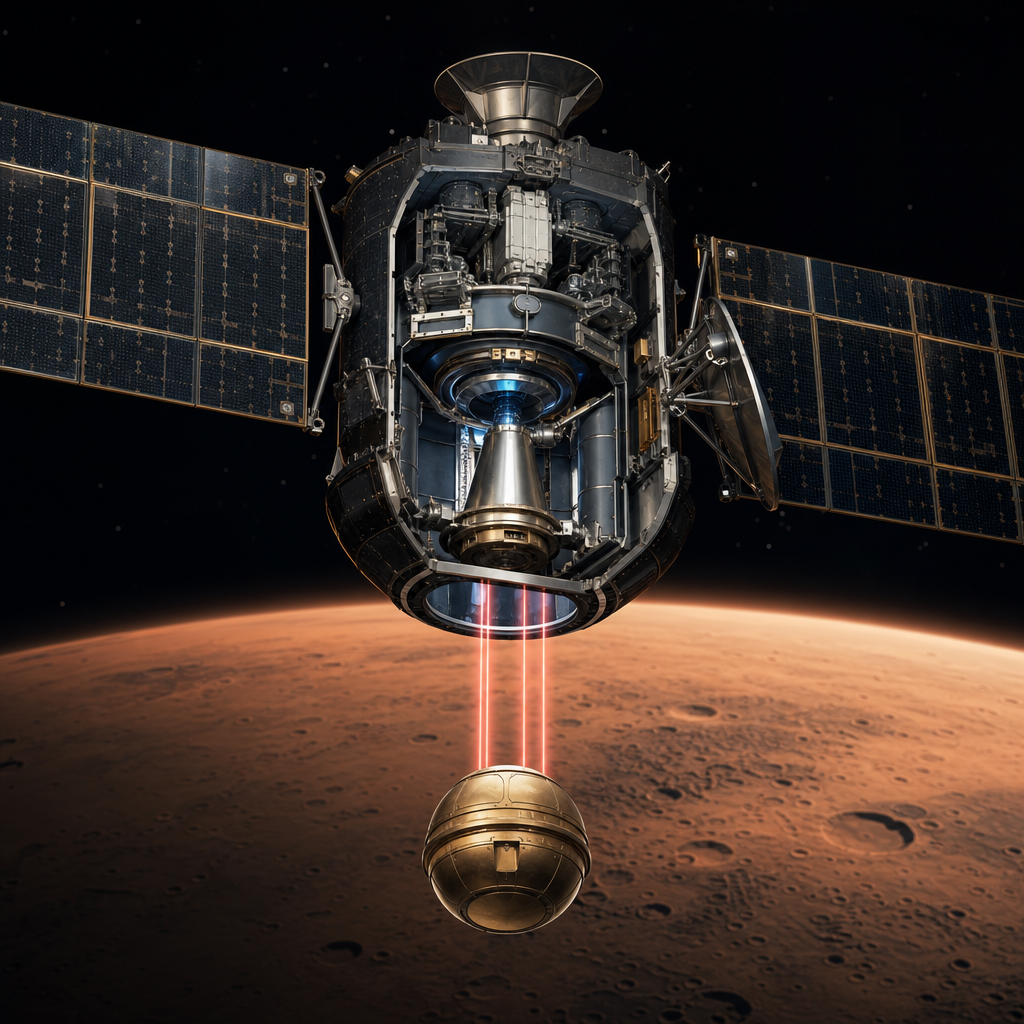 The Earth Return Orbiter uses precision lidar to capture the orbiting sample assembly.
The Three-Act Play of Interplanetary Retrieval
Returning samples from Mars is not a single launch event; it is a complex relay race involving NASA and the European Space Agency (ESA). To understand the complexity, we must look at the technical requirements of moving matter across 140 million miles of void.
1. The Collector: Perseverance's Ground Game
The mission is already underway. NASA’s Perseverance rover (part of the Mars 2020 mission) is currently traversing the Jezero Crater, a site chosen for its ancient river delta. Its job is to drill core samples into ultra-clean titanium tubes. According to NASA’s Jet Propulsion Laboratory (JPL), these tubes are the cleanest objects ever manufactured for space exploration to prevent terrestrial contamination.
2. The Launcher: The Sample Retrieval Lander
Scheduled for the mid-2020s, the Sample Retrieval Lander (SRL) will touch down near the Perseverance rover. This lander carries the Mars Ascent Vehicle (MAV)—a two-stage solid-fuel rocket. Perseverance will deliver its cached tubes to the lander, or two small Sample Recovery Helicopters will perform the retrieval if the rover is incapacitated.
3. The Courier: The Earth Return Orbiter
Once the MAV reaches Mars orbit, it will release a basketball-sized container called the Orbiting Sample (OS) assembly. Waiting in high orbit will be ESA’s Earth Return Orbiter (ERO). Using advanced lidar and optical sensors, the ERO will rendezvous with the OS, capture it, and seal it inside a secondary containment system designed to survive a high-speed atmospheric entry upon reaching Earth.
Why is the Mars Sample Return Mission Necessary?
Why spend billions to bring back a few pounds of rock when we have rovers on the ground? The answer lies in the sheer scale of terrestrial technology. The instruments we use to date rocks or search for microfossils are often the size of industrial refrigerators and require massive amounts of power and liquid nitrogen—things that simply cannot fit on a rover.
By bringing samples home, scientists can:
- Search for Ancient Life: Use electron microscopy to look for cellular structures.
- Absolute Dating: Use isotopic analysis to determine the exact age of Martian geological features.
- Future Safety: Scrutinize the toxicity and physical properties of Martian dust before human astronauts arrive.
"Mars Sample Return is the most complex mission NASA has ever attempted. It is the ultimate relay race."
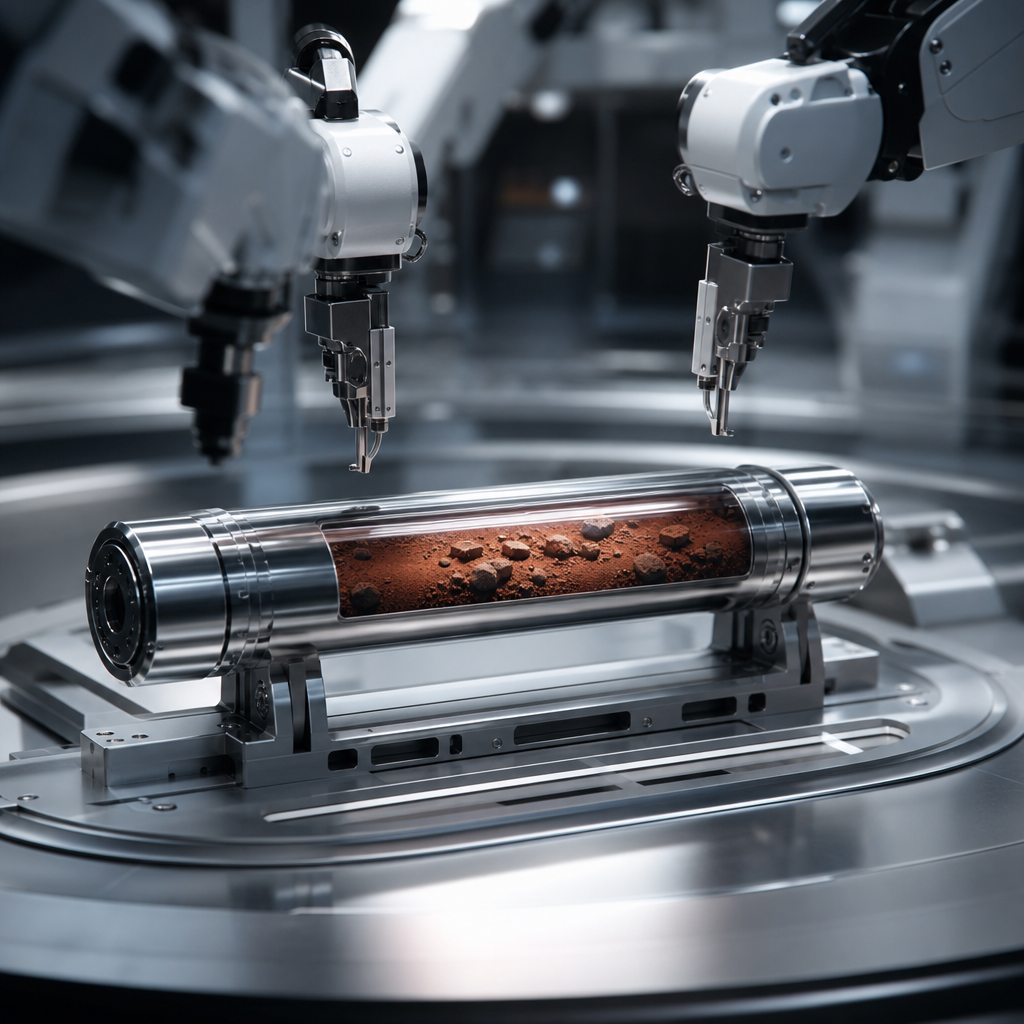 Back on Earth, the samples will undergo analysis in state-of-the-art biocontainment facilities.
Technical Comparison: Mars Sample Return vs. Previous Sample Missions
To grasp the magnitude of MSR, we must compare it to lunar or asteroid missions. Returning from Mars requires overcoming a significant "gravity well" that smaller bodies like the Moon or the asteroid Bennu (site of the OSIRIS-REx mission) do not possess.
| Feature | OSIRIS-REx (Bennu) | Apollo 11 (Moon) | Mars Sample Return |
|---|---|---|---|
| One-Way Distance | ~200 Million Miles | 238,855 Miles | ~140 Million Miles |
| Surface Launch | Minimal (Low Gravity) | Required (Lunar Module) | Required (Mars Ascent Vehicle) |
| Atmospheric Re-entry | 27,000 mph | 24,000 mph | 26,000+ mph |
| Operational Logic | Touch-and-Go | Human-Piloted | Autonomous Robotic Relay |
How the Mars Ascent Vehicle (MAV) Changes Everything
One of the most critical long-tail keywords in space exploration today is autonomous launch technology. The MAV is a 10-foot-tall rocket that must survive the harsh Martian winter and then execute a perfect vertical launch without a ground crew.
According to NASA's mission profile, the MAV will be the first rocket ever launched from another planet. This is a "pathfinder" technology; if we can launch a robotic payload from Mars, we are one step closer to launching a crewed return vehicle in the 2030s or 2040s. The MAV uses a specialized high-performance solid rocket motor designed to withstand temperatures as low as -84°F (-64°C).
The Risks: Environmental and Biohazard Containment
How do we ensure that Martian microbes (if they exist) don't contaminate Earth? NASA and ESA follow strict Planetary Protection protocols. The sample tubes are nested within three layers of containment. The final Earth Entry System (EES) is designed to land at the Utah Test and Training Range without a parachute, relying on a robust "crumple zone" structure to prevent any breach of the sample container. This "failsafe" design ensures that even in the event of a technical malfunction, the Martian material remains isolated from the Earth's biosphere.
The Logistics Timeline: A Decade-Long Journey
- 2021–2028: Sample Collection (Perseverance).
- 2028: Launch of the Sample Retrieval Lander and Earth Return Orbiter.
- 2029: Arrival at Mars and Surface Operations.
- 2030: Mars Ascent Vehicle launch to orbit.
- 2033: Return to Earth and landing in the Utah desert.
Is the Mars Sample Return cost worth it?
Yes, the Mars Sample Return mission cost—estimated between $8 billion and $11 billion—is justified by the potential for a scientific discovery that would redefine our place in the universe. While the price tag has faced scrutiny from the U.S. Congress, supporters argue that the technological spin-offs in autonomous robotics and the definitive answer regarding life on Mars are invaluable.
| Mission Phase | Primary Agency | Key Technology |
|---|---|---|
| Surface Collection | NASA | Perseverance Rover |
| Martian Ascent | NASA | Mars Ascent Vehicle (MAV) |
| Orbital Capture | ESA | Earth Return Orbiter (ERO) |
| Earth Entry | NASA | Earth Entry System (EES) |
The Final Frontier of Robotic Exploration
As we look toward the 2033 return date, the international scientific community remains in a state of high anticipation. The Mars Sample Return mission is more than a feat of engineering; it is a test of international cooperation. By bridging the gap between two planets, we are not just bringing home rocks; we are bringing home the history of a whole other world.
Frequently Asked Questions (FAQ)
Q: When will the Mars samples return to Earth?
A: Current mission timelines from NASA and ESA target a return date of 2033, though this is subject to funding stability and launch window availability.
Q: Why don't the rovers just analyze the samples on Mars?
A: Terrestrial labs are thousands of times more sensitive than any instrument that can fit on a rover, allowing for chemical and microscopic analysis that is currently impossible in situ.
Q: What happens if the Perseverance rover breaks down?
A: NASA has already deployed a backup sample cache on the Martian surface, and the Sample Retrieval Lander will carry two Ingenuity-class helicopters to retrieve them if the rover cannot deliver them personally.
Q: Is there a risk of bringing Martian bacteria to Earth?
A: NASA uses a 'break the chain' strategy with multiple layers of hermetic sealing and a high-durability entry vehicle to ensure zero contact between Mars material and the Earth's environment.
“Instead of taking the lab to Mars, we are bringing Mars home to our most powerful instruments.”
Get the Digest
Sharp, original reporting in your inbox. One weekly email, no noise.
Frequently asked questions
- How does the Mars Sample Return mission launch from Mars?
- The mission uses the Mars Ascent Vehicle (MAV), a small two-stage solid rocket landed on the surface, to blast the sample container into orbit.
- Where will the Mars samples land on Earth?
- The samples are planned to land at the Utah Test and Training Range within a specialized, high-durability containment capsule.
- How many samples is Perseverance collecting?
- Perseverance is equipped with 43 titanium sample tubes, intended to be filled with a diverse set of rock cores, regolith, and atmospheric samples.