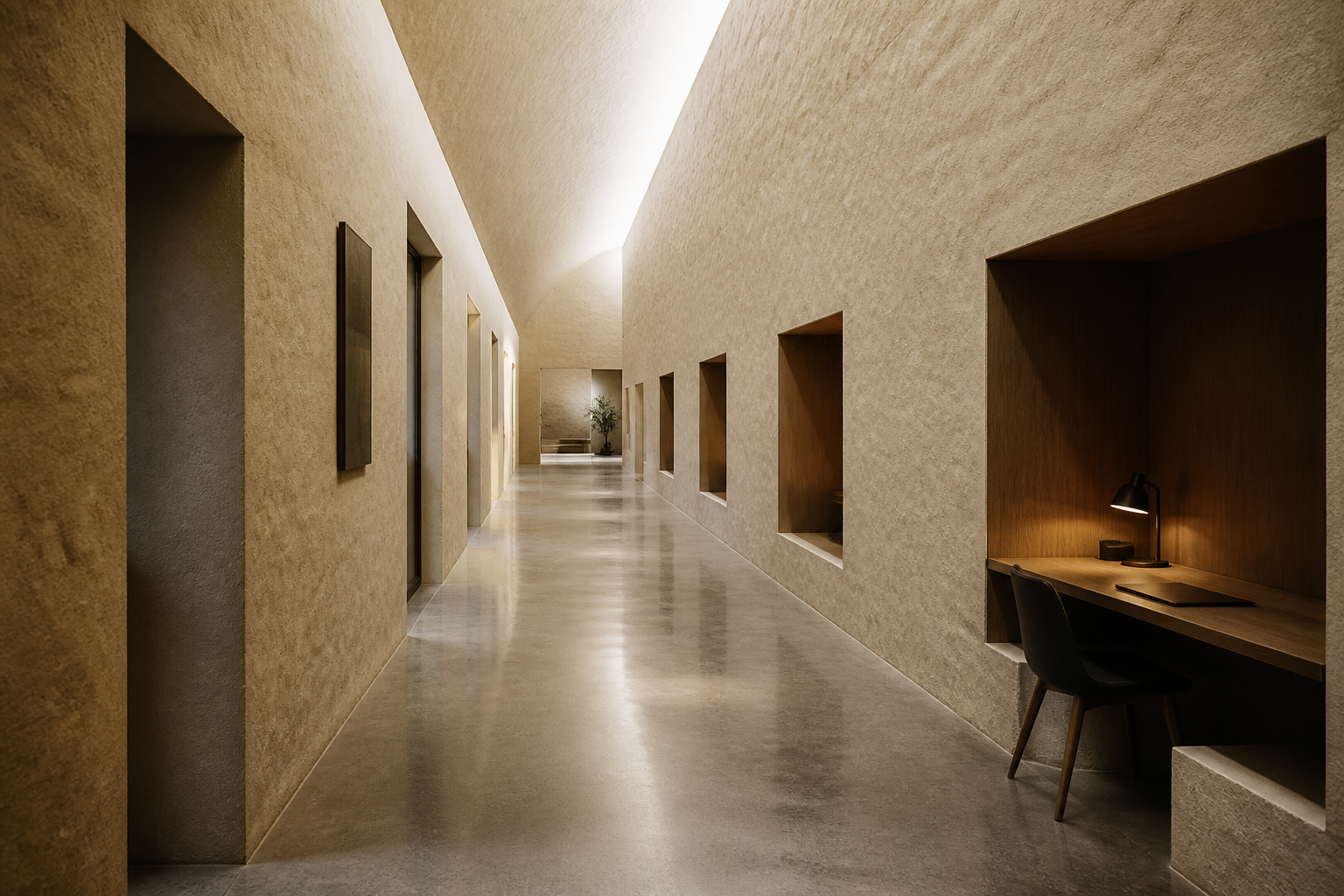
The Silence of the Vault: The Neo-Monastic Turn in Office Design
As open-plan fatigue reaches a breaking point, architects are looking to 12th-century Cistercian abbeys to solve the 21th-century crisis of focus.
Guide
Everything our newsroom has reported on deep work, drawn from 1 original stories.
The 'serendipity' of open-plan offices is being replaced by the intentional 'stillness' of neo-monastic architecture.
Source: The Silence of the Vault: The Neo-Monastic Turn in Office DesignArchitects are utilizing heavy materials like masonry and rammed earth to provide physical and acoustic isolation.
Source: The Silence of the Vault: The Neo-Monastic Turn in Office Design“We are no longer building for bodies; we are building for brains, using mass to provide stillness.”
It is a movement in architecture that prioritizes thick walls, acoustic isolation, and simple, heavy materiality—inspired by monasteries—to facilitate deep work.
Source: The Silence of the Vault: The Neo-Monastic Turn in Office DesignOpen-plan offices fail to protect the user's focus, leading to cognitive fatigue and decreased productivity; Neo-Monastic spaces provide the necessary security for flow states.
Source: The Silence of the Vault: The Neo-Monastic Turn in Office DesignSolid stone, rammed earth, heavy timber, and lime-wash plaster are preferred for their thermal mass and acoustic deadening properties.
Source: The Silence of the Vault: The Neo-Monastic Turn in Office DesignAs open-plan fatigue reaches a breaking point, architects are looking to 12th-century Cistercian abbeys to solve the 21th-century crisis of focus.
Sharp, original reporting in your inbox. One weekly email, no noise.